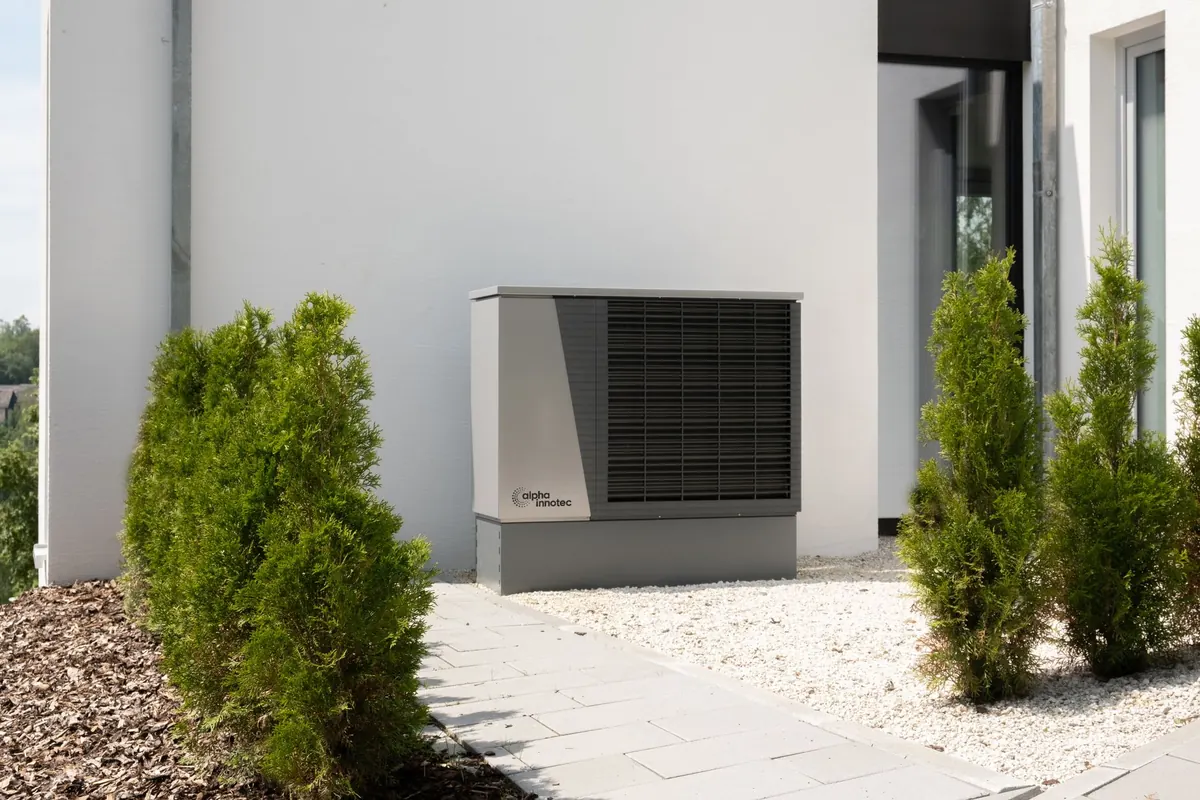
Ask a room of heating engineers how Britain should warm its homes and you will get an argument rather than an answer. Two candidates dominate: the heat pump, which is on sale now and going into thousands of homes every month, and the hydrogen boiler, which behaves much like the one in your kitchen today but is not yet something you can buy. The comparison is worth taking seriously, because the choice you make when your boiler finally gives up will shape your bills for fifteen years or more.
A gas boiler burns fuel and gets hot — around 70 to 80°C at the flow, which is why radiators are small and a house can be brought up to temperature quickly. A heat pump burns nothing. It moves heat from the air or the ground into your home using a compressor and electricity, and it works best at lower temperatures: usually 35 to 45°C. That single difference explains most of what follows.
A hydrogen boiler is, mechanically, a close cousin of the one you already own. It burns a gas and produces a flame, so it would slot into an existing radiator system with minimal disruption. The catch is the fuel. Hydrogen does not arrive through the pipes on most streets, and producing it cleanly is difficult and expensive.
Here is the number that matters most. Electricity costs roughly three to four times as much per unit as gas. A heat pump needs to be about three times more efficient than a boiler just to break even, and a well-installed one in a reasonably insulated home will comfortably beat that, especially in mild weather. A poorly installed one, or one bolted onto a draughty house with undersized radiators, may not.
Three things move the running cost up or down:
Hydrogen running costs are, for now, guesswork. No domestic hydrogen tariff exists, and the cleanest forms of hydrogen are expected to cost far more per unit of heat than natural gas. Anyone quoting you a precise figure is selling something.
Heat pumps reward a decent thermal envelope. Loft insulation, cavity or solid wall insulation, draught-proofing and sensible glazing all reduce how much heat you need to put in, which matters more when your system runs cooler and slower. That does not mean every home needs a full retrofit before a heat pump can go in — plenty of Victorian terraces run happily on them — but the worse your fabric, the bigger the radiators and the harder the system has to work.
The counter-argument for hydrogen has always been that it asks nothing of the building. That is true in principle. It is also true that a better-insulated home is cheaper to heat whatever sits in the cupboard, so insulation is rarely wasted effort. A proper heat loss survey, carried out room by room, will tell you what your house actually needs.
A heat pump's emissions depend on the electricity grid at the moment it runs. As renewables take a larger share and the grid gets cleaner, every heat pump in the country gets cleaner with it, without anyone touching the appliance. That is a structural advantage no combustion technology can match.
Hydrogen's carbon story is messier. Green hydrogen, made from renewable electricity, is genuinely low-carbon but scarce, and the volumes needed to heat millions of homes would be enormous. It is likely to be reserved for shipping, steel and chemicals, where electrification is harder. Blue hydrogen, made from gas with the carbon captured, still carries emissions from production and from whatever the capture process misses. Blending a modest share of hydrogen into the existing gas network reduces emissions by a correspondingly modest amount.
Public money currently follows heat pumps, not hydrogen boilers. In England and Wales the Boiler Upgrade Scheme offers a grant towards the cost of an air source or ground source heat pump. Scotland runs its own grant and interest-free loan package through Home Energy Scotland, and there are separate schemes in Wales and Northern Ireland. Heat pump installations and energy saving materials also currently benefit from a zero rate of VAT.
There is no equivalent subsidy for a hydrogen boiler because no domestic model is certified for general sale in the UK. Trials are running and the policy question of hydrogen's role in home heating is still pending. If a hydrogen network never reaches your street, the whole argument is academic.
For most people replacing a boiler in the next few years, the practical answer is a heat pump — particularly if you are on mains gas in a reasonably insulated home, or off the gas grid entirely and currently burning oil or LPG. Work through this in order:
Hard-to-treat properties — listed buildings, flats on shared heating, homes where the fabric simply cannot be improved — may need different answers: a high-temperature heat pump, a hybrid system, or in some cases waiting for better options. That is a conversation to have with an accredited installer or a local energy advice service rather than a decision to rush. Heating is a significant household cost, so it is worth getting independent advice before committing to a five-figure installation.
Photo: alpha innotec / Pexels